

Machining Insights – A New Approach to Manufacturability Analysis in DFMPro
Building on Part 1, this article explores the key features of DFMPro Machining Insights and how this will help in DFM reviews of machined parts. Remember that DFM decisions are not always about right/wrong parameters or pass/fail conditions. It includes trade-offs and human judgement in certain cases. There cannot be hard thresholds for many situations like number of setups, number of different hole diameters,etc. DFMPro Machining Insights complements the traditional GO/NOGO checks with early additional insights which are helpful in improving the ease of machining parts.
Key Features of DFMPro Machining Insights
Machining Axes SuggestionSelect the Right Machining Strategy Early
Having features needing different machining directions and complex machines can increase manufacturing cost, machining time, and lead to production delays. This feature analyses the part geometry, estimates the machining setups and recommends whether the part is best suited for 3-axis, 4-axis, or 5-axis machining.
By selecting the right machining strategy during the design stage, manufacturers can improve machine utilisation, reduce setup changes, simplify fixture planning, and achieve more accurate production cost estimates.
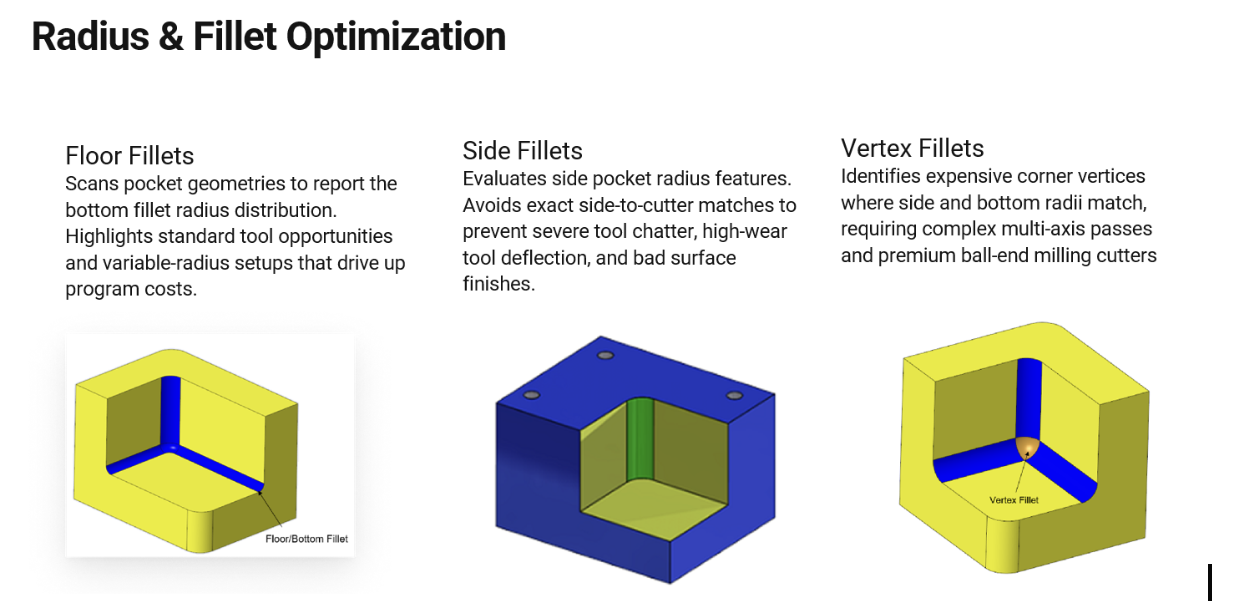
Radius and Fillet AnalysisReduce Tool Changes and Improve Surface Finish
Using numerous different blends or fillet radii often requires multiple cutting tools, increasing machining time and tooling costs. Machining Insights analyses floor fillets, side radii, vertex fillets, wall root radii, and side radius length-to-diameter ratios to identify opportunities for standardisation.
The software also highlights side radii that exactly match standard cutter sizes and recommends a small increase where appropriate. This helps reduce tool chatter, minimise tool wear, improve surface finish, extend tool life, and lower machining costs.
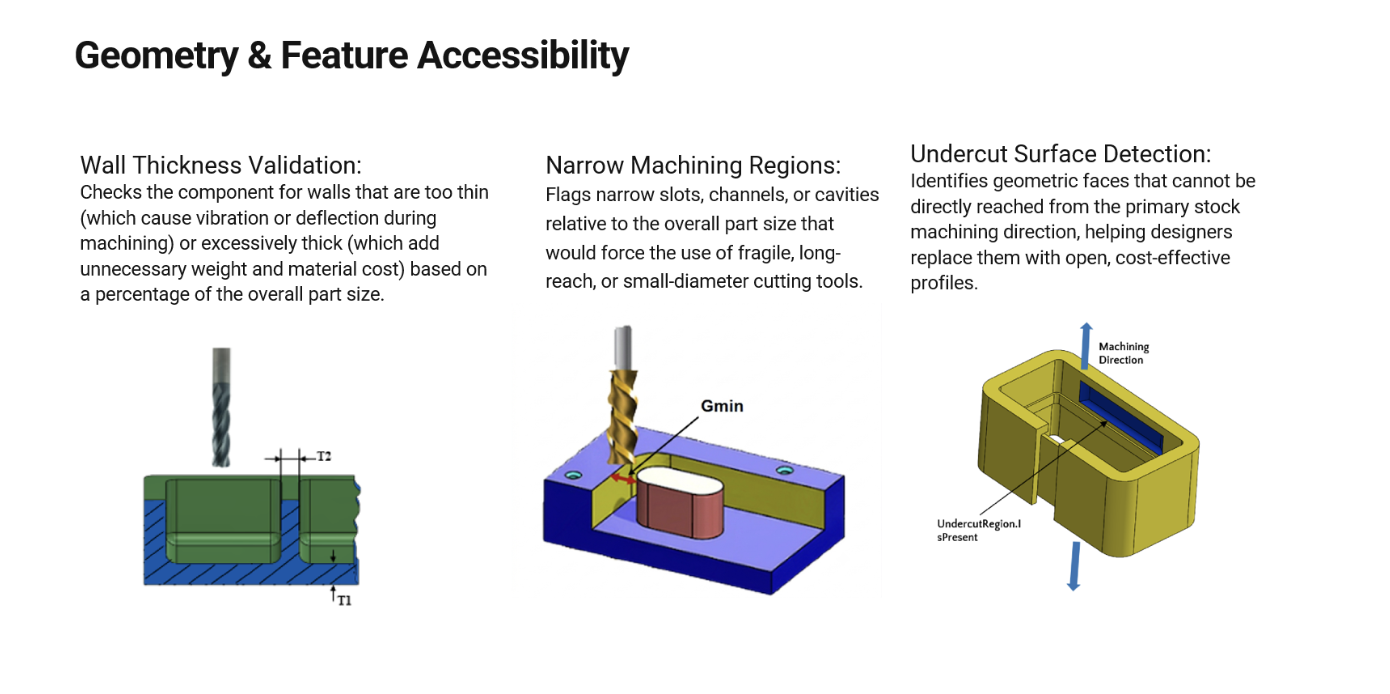
Geometry AccessibilityAvoid Difficult-to-Machine Designs
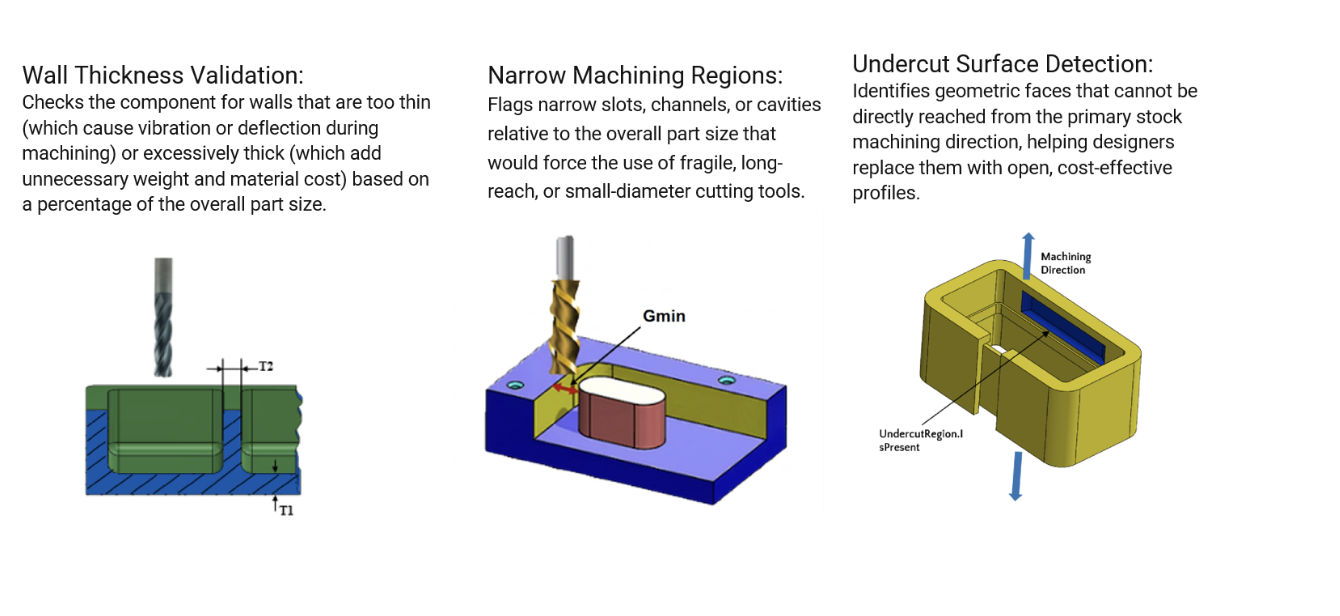
Some regions of a part are difficult or impossible to reach with standard cutting tools. Machining Insights identifies narrow machining regions, undercut surfaces, inaccessible areas, and closed wall root radius conditions before manufacturing begins.
By identifying these issues early, engineers can simplify the design, reduce the need for special tooling or multi-axis machining, shorten machining time, and improve overall manufacturability.
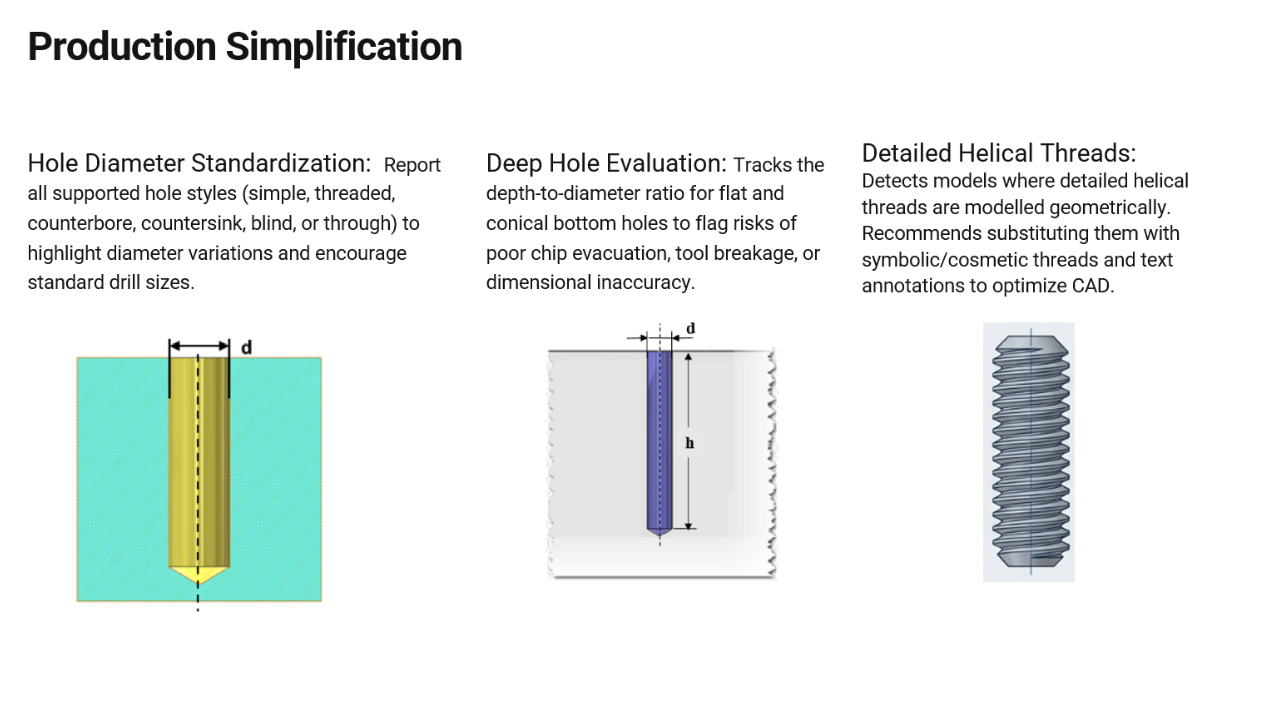
Production SimplificationEliminate Unnecessary Machining Operations
Small design details such as detailed helical threads, engraved text, tiny chamfers, small fillets, ball-milled surfaces, and deep holes often increase machining complexity without adding significant functional value.
Machining Insights reports these features and recommends simpler alternatives wherever possible. This helps reduce machining time, lower production costs, and increase manufacturing efficiency.
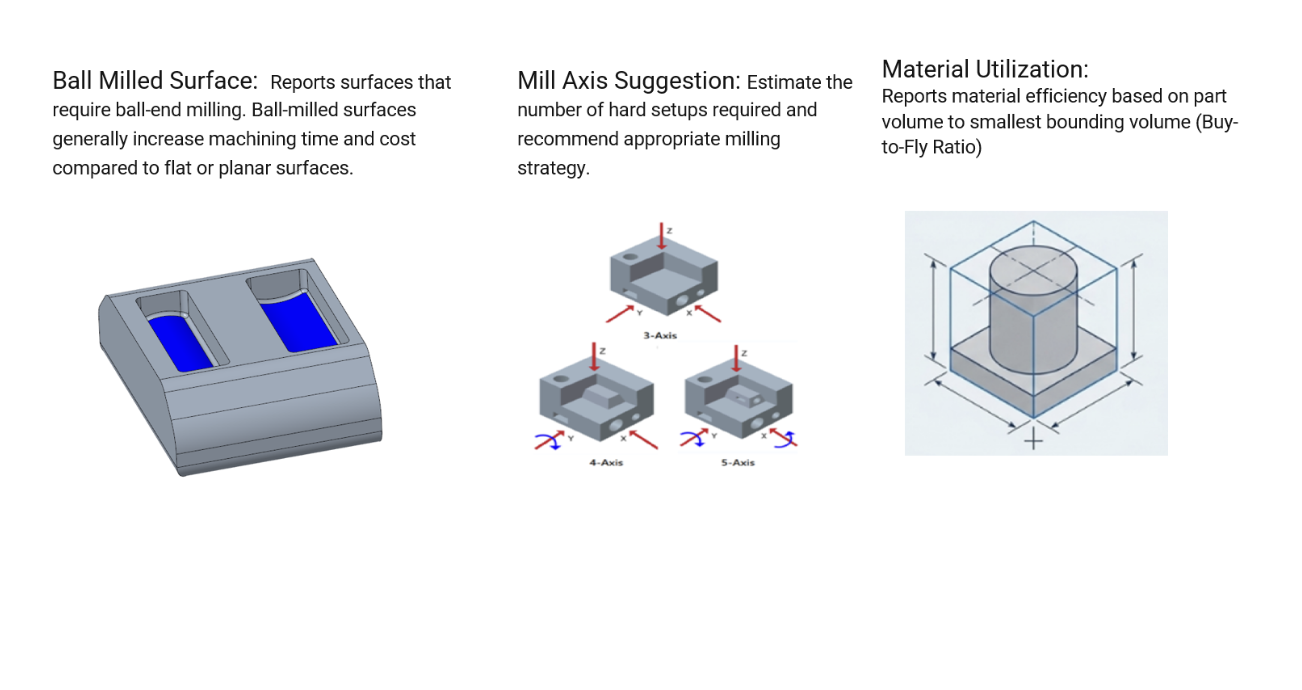
Material Utilisation (Buy-to-Fly Ratio)Reduce Material Waste
Material cost represents a significant portion of the total machining cost, especially for aerospace and high-value components. Machining Insights calculates the Buy-to-Fly Ratio by comparing the finished part volume with the smallest possible stock material.
This allows engineers to identify designs with excessive material removal, optimise stock selection, reduce raw material waste, improve sustainability, and lower overall manufacturing costs.
Why Choose DFMPro Machining Insights?
DFMPro Machining Insights helps engineers design parts that are easier and cheaper to manufacture. Instead of only finding manufacturing problems, it gives useful insights during the design stage to improve the manufacturability of the part so that better decisions can be made early.
Reduce machining costs
by identifying features that increase manufacturing time and cost.
Improve manufacturability
by finding designs that are difficult to machine and suggesting better options.
Select the right machining process
by helping choose the best manufacturing method for the part.
Reduce machining setups
by identifying ways to machine more features in fewer setups.
Reduce engineering changes
by finding manufacturing issues before production begins.
Optimise material usage
by reducing unnecessary material removal and improving material efficiency.
Improve collaboration between design and manufacturing
by giving both teams the same manufacturing information to make better decisions.
Conclusion
Machining Insights represents a significant evolution in Design for Manufacturability. Rather than simply identifying design violations, it empowers engineering teams with actionable manufacturing intelligence based on overall geometric behaviour. By combining feature-independent geometry analysis with manufacturing expertise, DFMPro helps organizations optimize machining strategy, simplify production, standardize tooling, and reduce manufacturing costs—all while enabling better collaboration between design and manufacturing.
Request a Demo